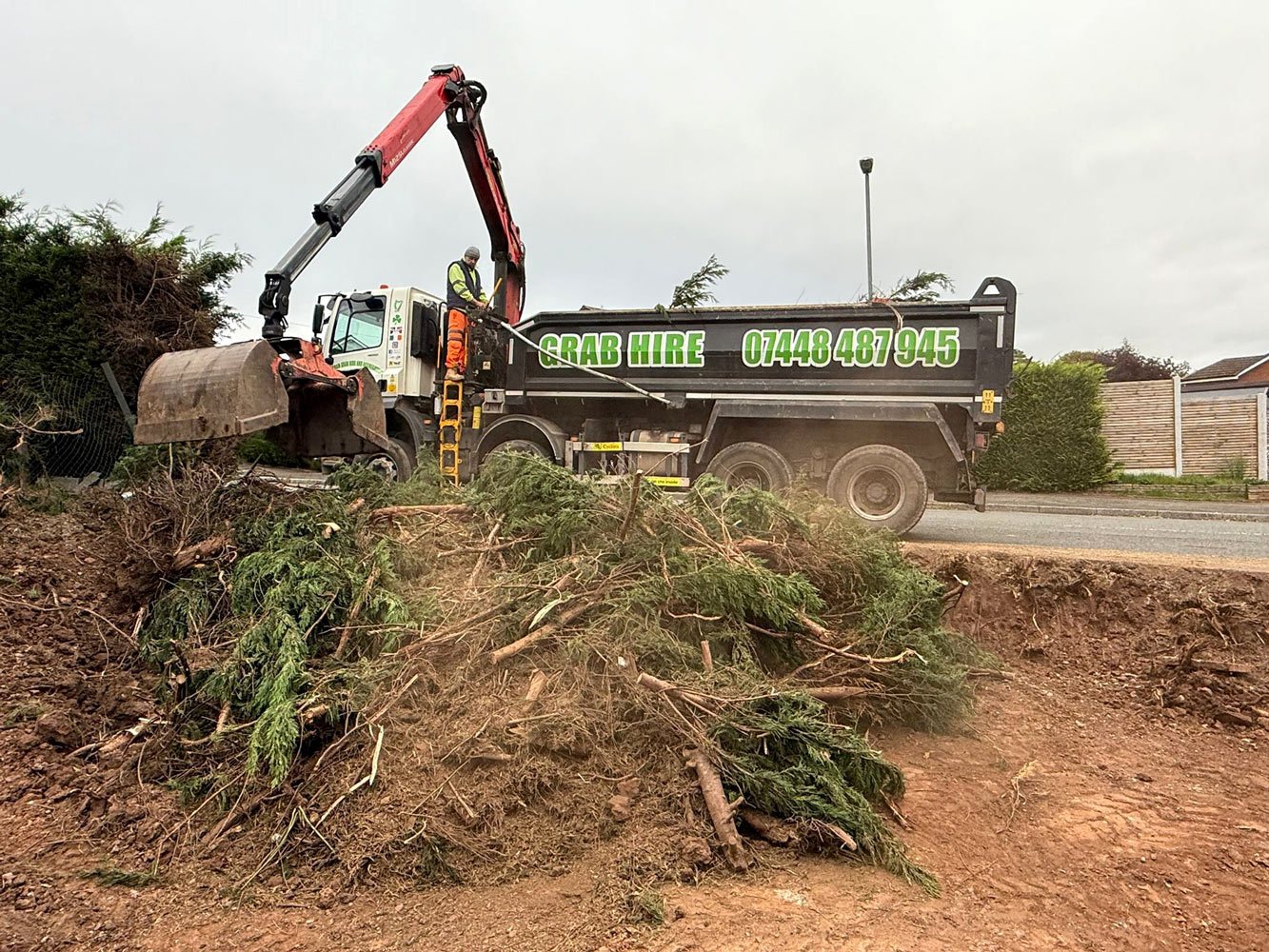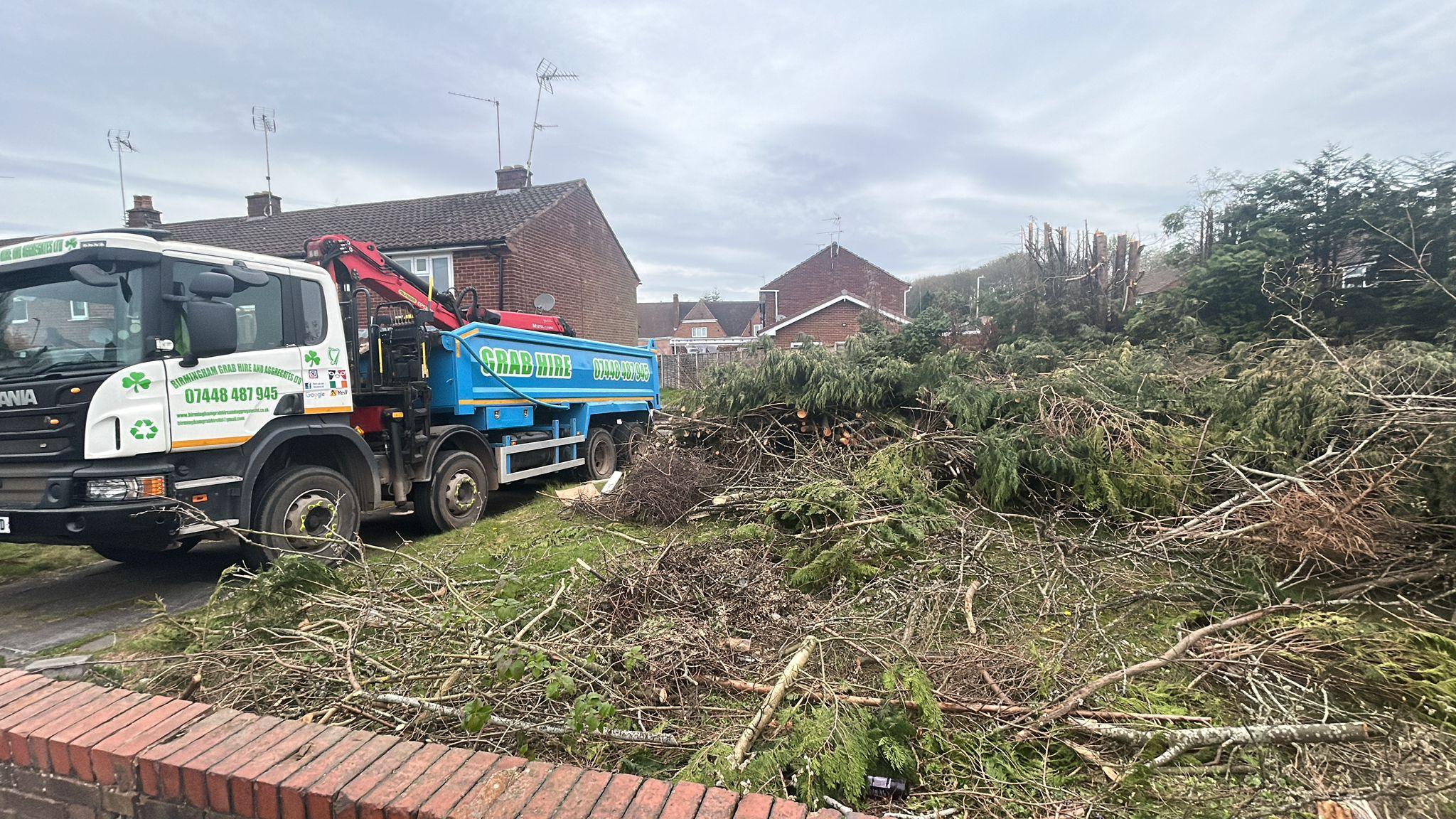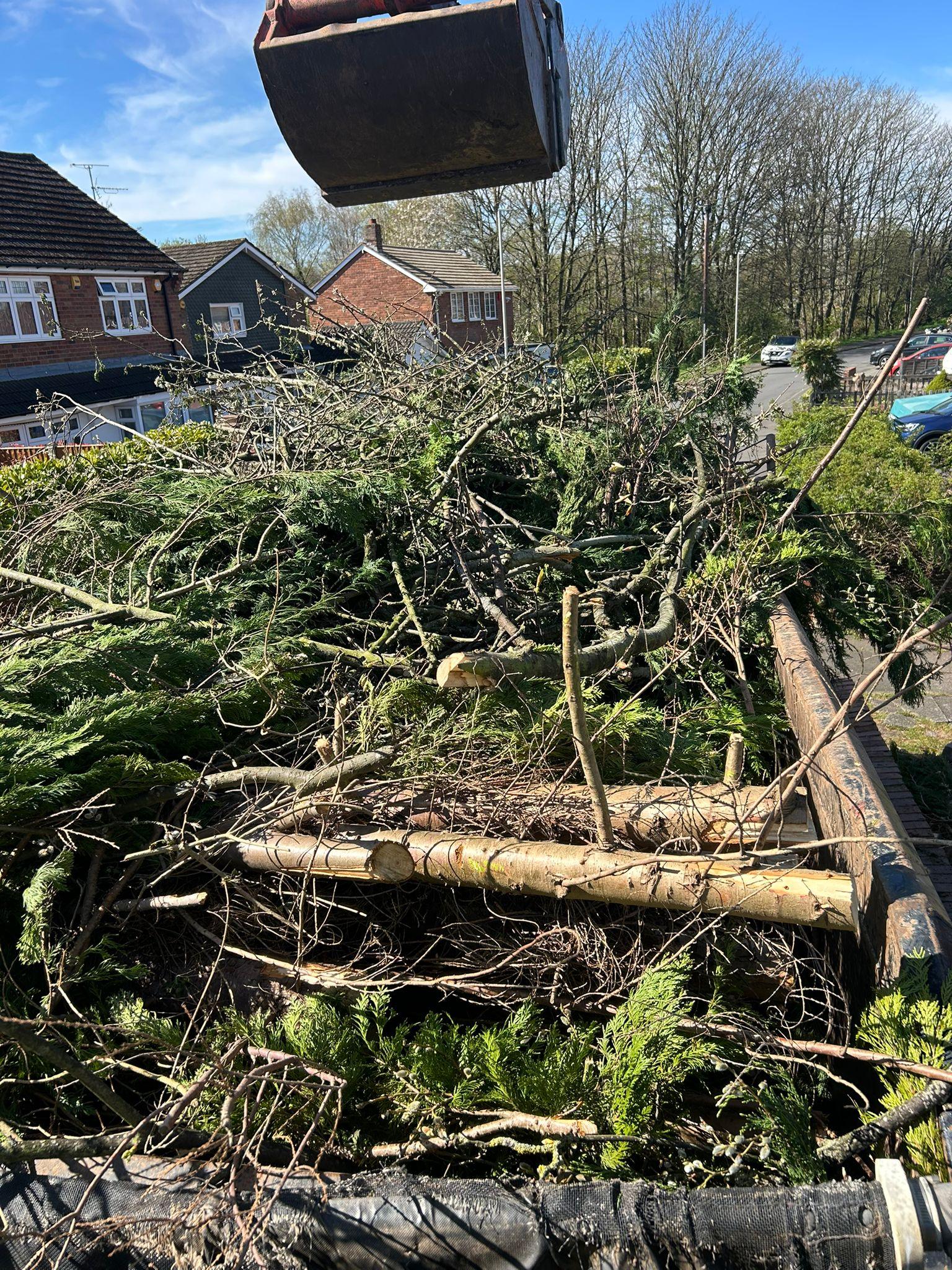
Green bulk waste covers a broad range of natural materials that accumulate during garden work, landscape care and outdoor maintenance. It includes items that come from plants, soil activity and seasonal growth. Common examples include grass cuttings, hedge clippings and fallen leaves, which tend to gather quickly during routine gardening. Branches, twigs and general woody material are also frequent, especially after pruning or storm damage. Many people also clear unwanted shrubs, roots and old plant bedding, all of which can be collected as part of green bulk waste.
Green bulk waste covers a wide range of natural material produced during gardening, landscaping, and general outdoor care. Understanding the main categories ensures clear sorting and smooth collection.
Our grab lorries can manage a wide range of materials, including:
Grass cuttings, hedge clippings, and fallen leaves gather quickly during routine maintenance. These lighter materials form a large share of everyday garden clearance and are simple to process for recycling.
Branches, twigs, pruned limbs, and unwanted shrubs create heavier loads that often require careful handling. Larger pieces such as tree trunks and stump material may also be included when free from contamination.
Unwanted soil, turf, compost, and root matter can be collected as part of green bulk waste. These items vary in density and may need separate sorting depending on condition.
Spent flowers, weeds, fruit fall, and vegetable plants past their best all count as green waste and should be kept apart from general rubbish for correct recycling.
Separating green bulk waste supports tidy outdoor spaces and encourages responsible environmental practice. When collected correctly, much of this material can be turned into compost or biomass, reducing strain on landfill and supporting sustainable management.